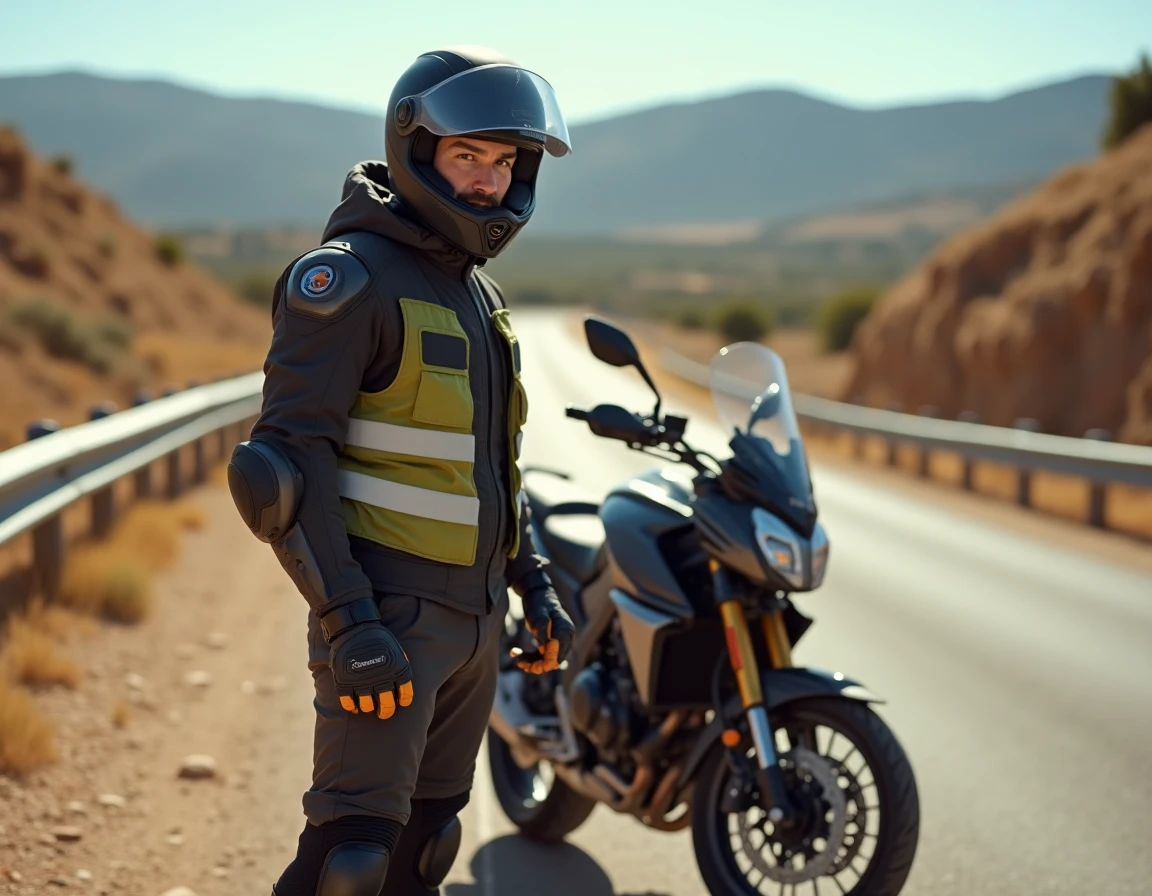
Since January 2026, the Spanish General Directorate of Traffic (DGT) has tightened equipment requirements for motorcyclists traveling on the country’s road network. Full-face helmets, gloves, and high-top shoes: several elements that were previously recommended have now become legal obligations. For French motorcyclists preparing a road trip south of the Pyrenees, confusion reigns on forums, particularly regarding the V-16 beacon and its application to foreign vehicles.
Connected V-16 beacon in Spain: what really concerns foreign motorcyclists
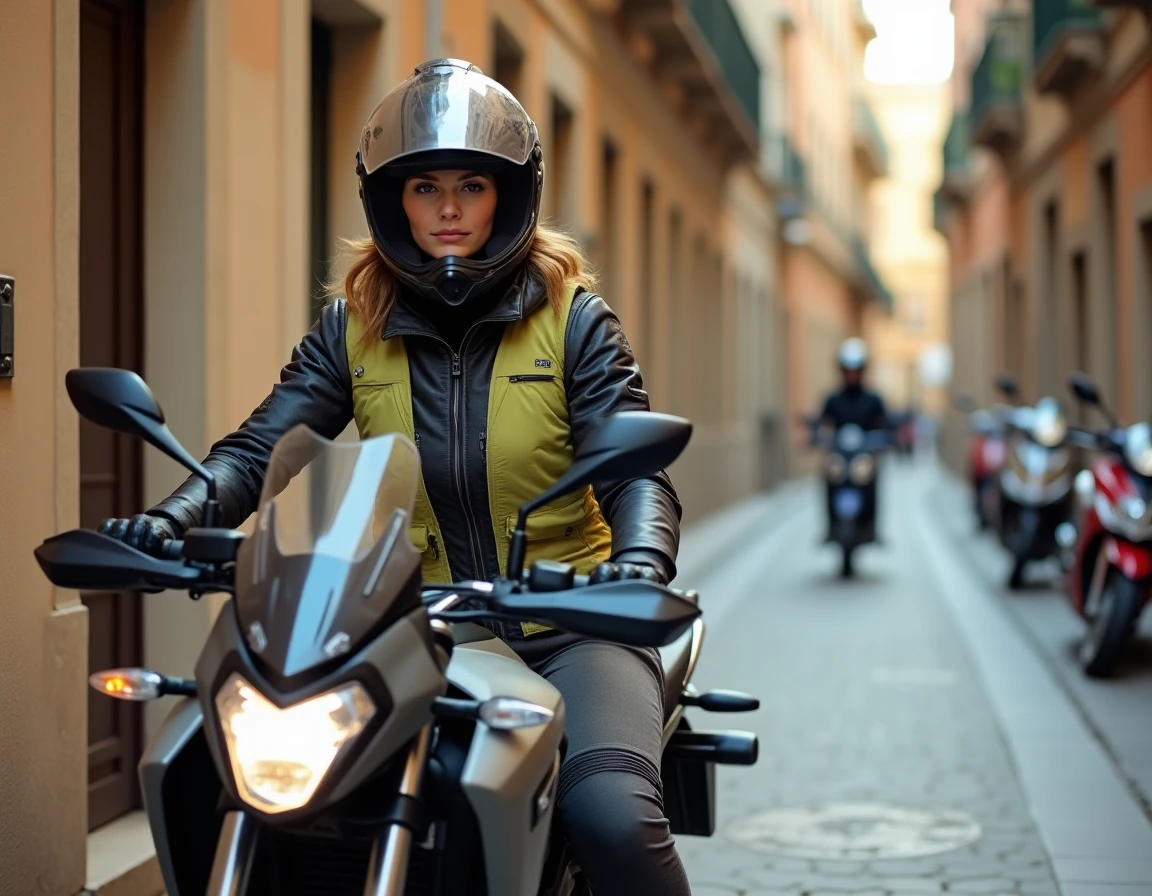
The issue of the connected V-16 beacon crystallizes misunderstandings. Since January 1, 2026, the connected V-16 replaces warning triangles for all vehicles registered in Spain. This light device, mounted on the roof or tank in case of breakdown, emits a geolocated signal to the DGT 3.0 platform to alert other users in real time.
French or Belgian motorcyclists passing through Spain are not subject to this obligation. The DGT has explicitly stated that vehicles registered abroad can continue to use the warning triangle, provided they have it on board. Despite this official position, several Facebook groups of French-speaking motorcyclists and RV enthusiasts are spreading the incorrect information that the V-16 would be mandatory for everyone, including foreigners.
For those wishing to delve deeper into the issue of mandatory motorcycle equipment in Spain 2025, CE-approved gloves are one of the most frequently checked items during roadside inspections.
Approved helmet in Spain: the ECE 22.06 standard and concrete risks
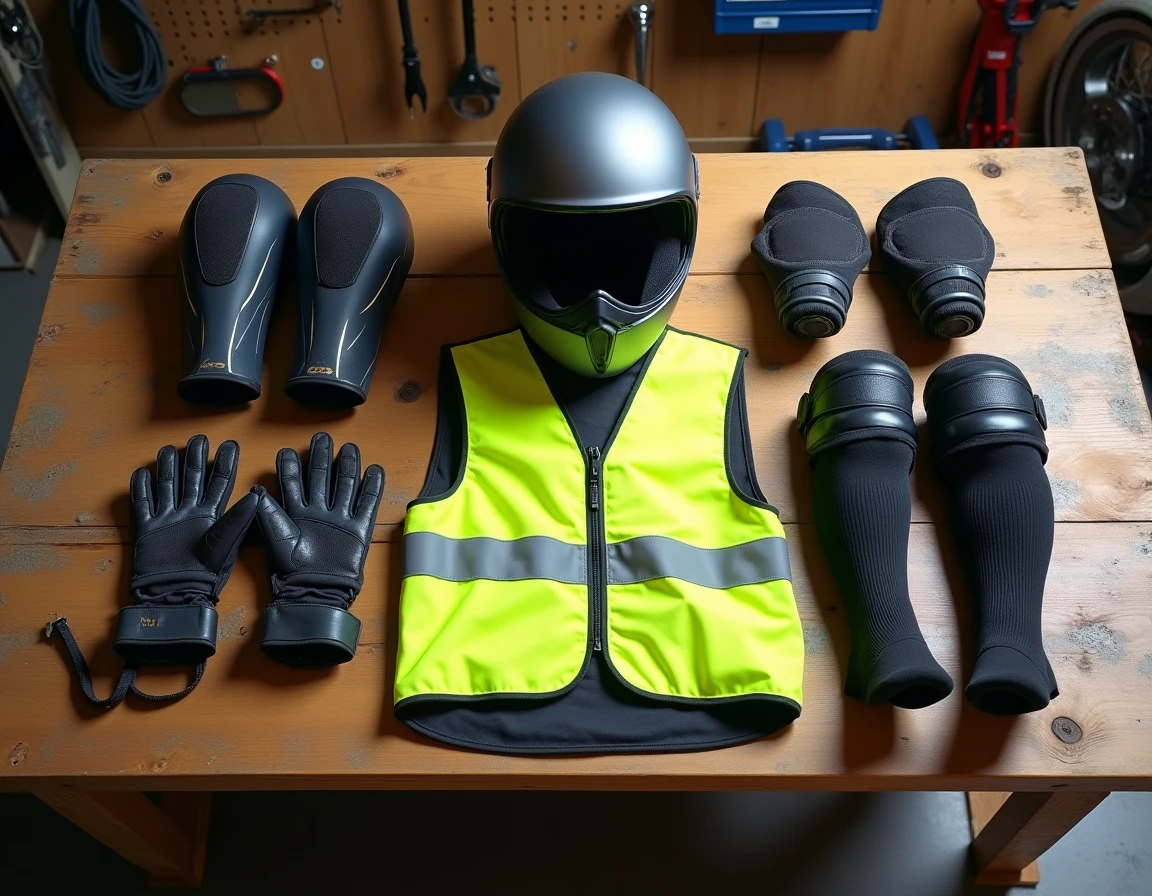
The helmet remains the centerpiece of Spanish motorcycle regulation. The DGT requires an approved helmet bearing the ECE marking, and the current reference standard is ECE 22.06. Jet helmets, although technically approved if they bear the correct marking, are the subject of recurring debates among motorcyclists.
An non-compliant helmet exposes the rider to a immediate fine of 200 euros and the deduction of 3 points from their license. This sanction also applies to foreign drivers due to information exchange agreements between European states. Specifically, a French motorcyclist fined in Andalusia will receive the citation notice at their home address.
The point that escapes many passing motorcyclists: the Spanish police check the approval label inside the helmet, not just its exterior appearance. A helmet purchased outside the European Union or only bearing the DOT standard (American standard) will not be accepted, even if it is more protective on paper.
Gloves, shoes, and body protection: the new DGT requirements for motorcyclists
Beyond the helmet, DGT regulations now require the wearing of CE-approved gloves and closed high-top shoes for all riders and passengers of motorized two-wheelers. This evolution brings Spanish legislation closer to the French framework, where certified gloves have been mandatory for several years.
The items checked during a roadside stop in Spain include:
- Gloves bearing the CE marking compliant with standard EN 13594, verifiable on the label sewn inside the glove
- Closed shoes covering the ankle, with sandals and low-top sneakers explicitly excluded
- Full-face or modular helmet approved ECE 22.06 (or 22.05 still tolerated in some cases)
Upper body protective clothing (jacket with back, chest, and elbow protectors) is not part of the legal obligations at this stage. However, the DGT strongly recommends wearing a reflective vest during nighttime travel or in low visibility conditions.
CE marking and protection classes: what the labels mean
The European classification system assigns motorcycle clothing a class ranging from C (minimal protection) to AAA (maximum protection, intended for competition). For road use in Spain, class A is the minimum recommended for a jacket or pants, even though the law does not yet impose a specific class for clothing.
Gloves must bear the EN 13594 marking, which guarantees abrasion and impact resistance tested in a laboratory. A work or ski glove, even if thick, does not meet this standard and will be considered non-compliant in case of inspection.
Road checks and motorcycle fines in Spain: what French motorcyclists should anticipate
The DGT has intensified targeted checks on two-wheelers, particularly on tourist routes in Costa Brava, the Balearic Islands, and Andalusia. Feedback from the field varies on the actual frequency of these checks depending on the regions, but the trend towards tightening is documented.
One aspect rarely mentioned in classic motorcycle guides: Spanish checks often combine equipment verification and breathalyzer testing. A motorcyclist stopped for a lack of gloves may simultaneously be subjected to a breathalyzer test, with thresholds and penalties distinct from those practiced in France.
For French residents, European information exchange agreements allow for the transmission of fines. Ignoring a Spanish citation is no longer a viable strategy since the implementation of these bilateral protocols.
- Fine for lack of approved helmet: 200 euros, deduction of 3 points
- Fine for absence of CE gloves: amount varies by autonomous community
- Lack of V-16 beacon (Spanish vehicles only): sanction currently being defined by the DGT
Motorcycle regulations in Spain are evolving quickly, and information circulating on social media does not always reflect the official position of the DGT. Before crossing the border, checking the compliance of each piece of equipment with EN and CE standards remains the most reliable precaution, much more than relying on forum testimonials.