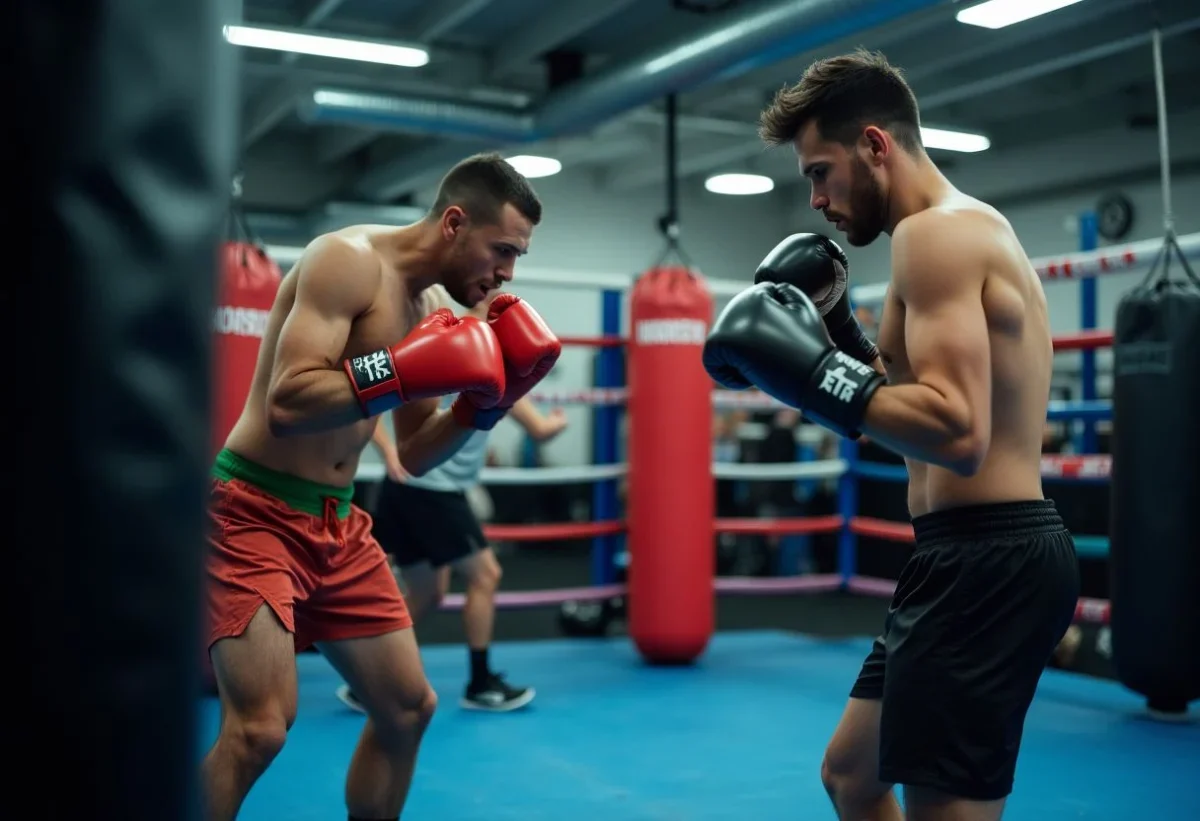
Boxing, in its various forms, has always fascinated enthusiasts of combat sports and martial disciplines. In the world of rings, two styles stand out for their techniques, traditions, and philosophy: English boxing and French boxing. Each possesses its own identity, marked by centuries of evolution and cultural influence. While English boxing has established itself as an essential pillar worldwide, savate or French boxing offers a unique approach by integrating specific foot movements. These two disciplines, although belonging to the same universe, present notable differences both technically and culturally, which deserve to be explored to better understand what makes them unique.
Historical and Cultural Origins
The roots of these two forms of boxing run deep into European history, reflecting the values and traditions of their respective eras.
- English boxing: Emerging in the 18th century in England, it finds its roots in gladiatorial combat and the strict rules established by the Marquis of Queensberry. The idea was to create a more structured and less brutal sport, leading to the development of precise rules, including the exclusive use of fists.
- French boxing: Born in the 19th century, savate draws its origins from Parisian street fighting techniques and kickboxing traditions. It formalized over time to become an elegant and rigorous discipline, integrating high-level foot movements, a feature that distinctly sets it apart from its British cousin.
Techniques and Fighting Styles
The styles and techniques of these two disciplines are defined by strict rules and a unique approach to combat.
In English boxing, the fight focuses entirely on the use of fists. The punches are varied, ranging from quick jabs to powerful uppercuts. The boxer must master distance and defense with surgical precision, all while adhering to the ring rules that limit movements to the upper body.
French boxing, on the other hand, integrates an additional dimension through the use of feet. Practitioners, known as savateurs, must master various techniques such as the whip kick or the chasse. This diversity of movements makes it an impressive visual spectacle and requires perfect balance and coordination from the fighters.
Training and Physical Preparation
The physical preparation for these two disciplines requires total commitment, with marked differences in training approaches.
For English boxing, the emphasis is on endurance, speed, and punching power. Training sessions often include skipping rope, bag work, and shadow boxing exercises to refine technique and speed.
- In French boxing, training extends to the entire body due to the integration of kicks. Savateurs practice both flexibility, leg strength, and strike precision.
- A boxing club in Paris often offers tailored workshops for those wishing to discover the subtleties of these hybrid techniques, blending tradition and modernity.
Rules and Competitions
The competitions for each of these forms of boxing are governed by specific rules that directly influence the style and strategy of the fights.
In English boxing, fights are divided into rounds, each round generally lasting three minutes, with one-minute breaks. Points are awarded primarily for successful strikes, technique, and aggression. The fight can end by judges’ decision, KO, or referee stoppage.
- For French boxing, the rules allow for a greater variety of techniques, integrating both feet and fists. Competitions are often judged on the precision of strikes and the technical quality of movements, with distinct categories for amateurs and professionals.
- International savate competitions, although less frequent than those of English boxing, bring together practitioners from all backgrounds, demonstrating the passion and respect for this unique martial art.