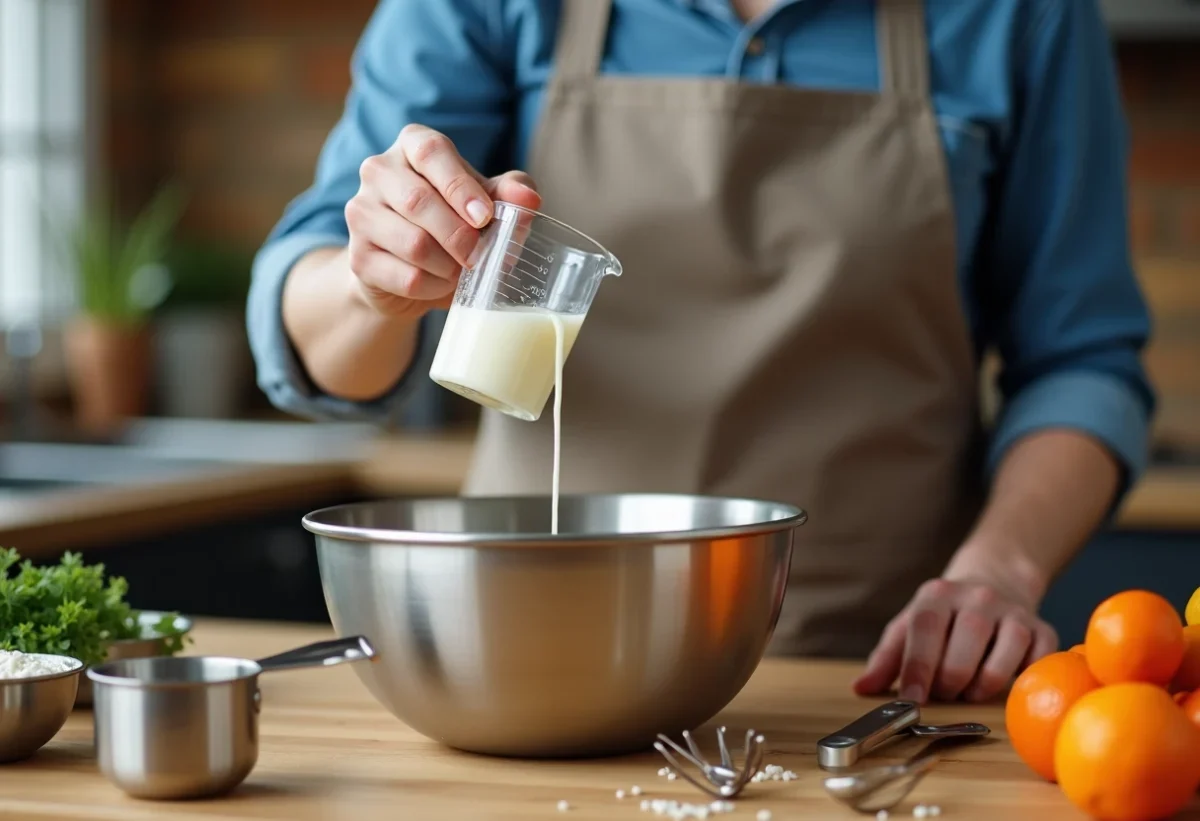
In cooking, precision is often the key to success, especially when it comes to measuring liquid ingredients. A small variation can influence the texture, taste, and even the appearance of your dishes. However, it is not always easy to convert milliliters to cups or ounces.
To avoid mistakes, you need to know a few simple tips. For example, one tablespoon is approximately 15 milliliters, while one cup represents 240 milliliters. Using specific tools like measuring cups or electronic scales can also help achieve accurate measurements. Adopting these best practices allows you to cook with more confidence and succeed in all your recipes.
The essential tools for measuring liquid ingredients
Basic utensils
To obtain precise measurements in the kitchen, you need to have the right tools. Among them, some are essential:
- Teaspoon: used in many recipes for small quantities of liquids.
- Tablespoon: ideal for medium measurements, such as oils or sauces.
- Cup: commonly used to measure larger volumes, like milk or water.
- Glass: often used in baking recipes for various liquids.
- Bowls: can be used for mixing or larger measurements, although less precise than the previous tools.
Knowing the equivalents
Mastering conversions between different units of measurement is also fundamental. For example, to convert 300 ml to liters, you just need to know that 1 liter equals 1000 milliliters. 300 ml represents 0.3 liters. This type of conversion is essential for adapting recipes to different formats.
Using measuring tools
To ensure accuracy, it is recommended to use specific tools such as measuring cups or electronic scales. These instruments allow you to measure volumes with great precision, thus avoiding the approximations that often lead to errors in cooking. Adopting these practices makes it easier to execute recipes and improves confidence in the kitchen.
Having a set of suitable utensils and knowing the basic equivalents in milliliters, liters, and other units of measurement is essential for successfully executing all your recipes with precision. 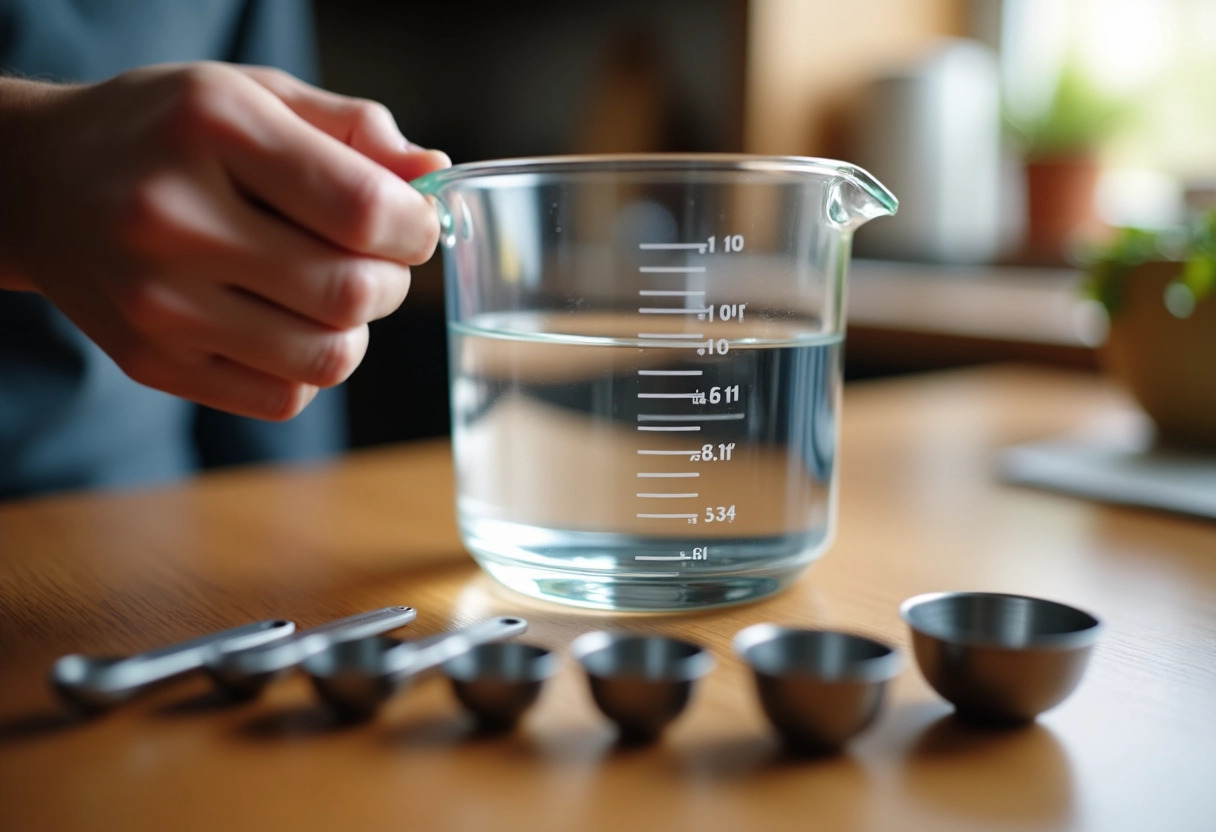
Techniques and tips for precise measurements
Understanding conversions
To correctly measure your liquid ingredients, you need to understand the conversions between different units of measurement. For example, 1 milliliter (ml) of water equals 1 gram (g). This equivalence is due to the density of water, which is 1 g/ml. This relationship varies for other ingredients:
- Oil: 0.92 g/ml
- Flour: 0.59 g/ml
- Sugar: 0.85 g/ml
- Milk: 1.03 g/ml
Using precision tools
For precise measurements, prioritize the use of suitable tools:
- Electronic scale: allows you to weigh ingredients with great accuracy.
- Measuring cups: ideal for measuring liquid volumes.
These instruments minimize errors and ensure consistent results.
Adopting proven methods
When measuring your ingredients, follow these techniques to optimize accuracy:
- Use a flat surface to place your measuring utensils.
- Ensure that the ingredient is at room temperature, especially for viscous liquids like oil or honey.
- Always read the liquid levels at eye level to avoid parallax errors.
By combining an understanding of conversions and the use of appropriate tools, you will be able to measure all your liquid ingredients accurately, ensuring successful recipes.